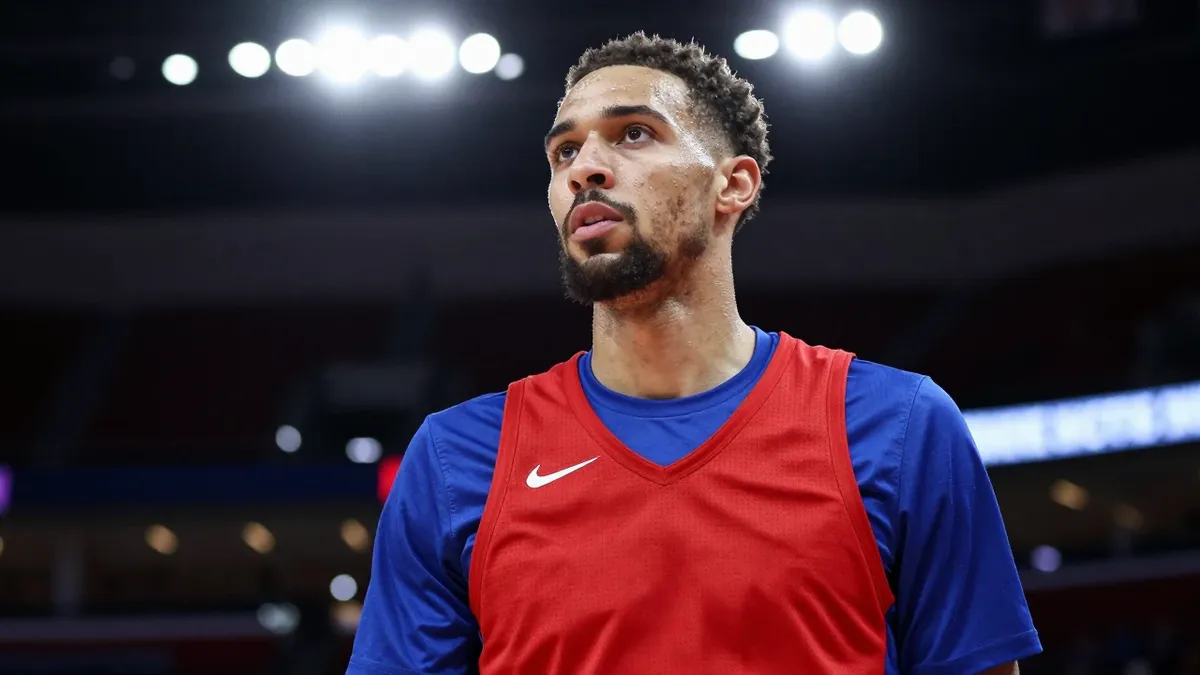
The Detroit Pistons are building an elite shooting rotation by trading for Isaiah Joe to pair with veteran sniper Duncan Robinson. This strategic offseason move directly addresses a key weakness from last season, where Robinson was often the team's only reliable high-volume three-point threat.
Why did the Pistons target Isaiah Joe?
Detroit's front office identified perimeter shooting as a primary area for improvement. Duncan Robinson was brilliant in his first Pistons season, leading the team with a 41% three-point shooting mark. But he was the only Detroit player to eclipse the 40% threshold from distance last year. The Pistons needed another consistent threat to prevent defenses from keying solely on Robinson.
They found their answer in Isaiah Joe, who shot over 40% from deep for the Oklahoma City Thunder last season. Joe, along with other summer acquisitions John Collins, Taurean Prince, and Gary Harris, gives Detroit multiple players who can stretch the floor. Robinson finally has legitimate competition for his role as the team's top movement shooter.
How will Robinson and Joe fit together on the court?
Both players ranked among the NBA's top ten movement three-point shooters last season. Their offensive skill sets are remarkably similar. Defensively, however, their roles will be shaped by the players around them. Ausar Thompson's versatility and Cade Cunningham's size allow them to handle tougher perimeter assignments.
This lets the Pistons deploy Robinson and Joe as shooting specialists. They won't be regularly tasked with high-leverage defensive matchups. Joe lacks the size to defend bigger wings, so his assignments will likely be limited to backcourt players. Detroit's roster construction is adaptable, using Thompson and Cunningham to cover for specialists on the other end.
What does this mean for Detroit's rotation and future?
Robinson started a career-high 77 games last season, averaging 27.4 minutes per game. Joe's typical workload in Oklahoma City was 21.2 minutes. Their combined playing time dovetails perfectly to ensure at least one elite shooter is on the floor at all times. This provides head coach Monty Williams with incredible lineup flexibility.
Having multiple players who can hit big triples changes Detroit's offensive ceiling. It creates more driving lanes for Cade Cunningham and Jalen Duren inside. The team's overall shooting upgrade should be evident in their upcoming games, which you can track on our schedule page. Adding this firepower is a clear response.
The Pistons won 60 games and secured a top seed last season. But their playoff run exposed a need for more consistent shooting. The front office acted decisively. Robinson's veteran experience from deep Miami Heat playoff runs remains vital for a young core. Now, with Joe beside him, Detroit's perimeter attack looks far more dangerous. This duo gives the Pistons a defined identity as they aim to build on last year's success.