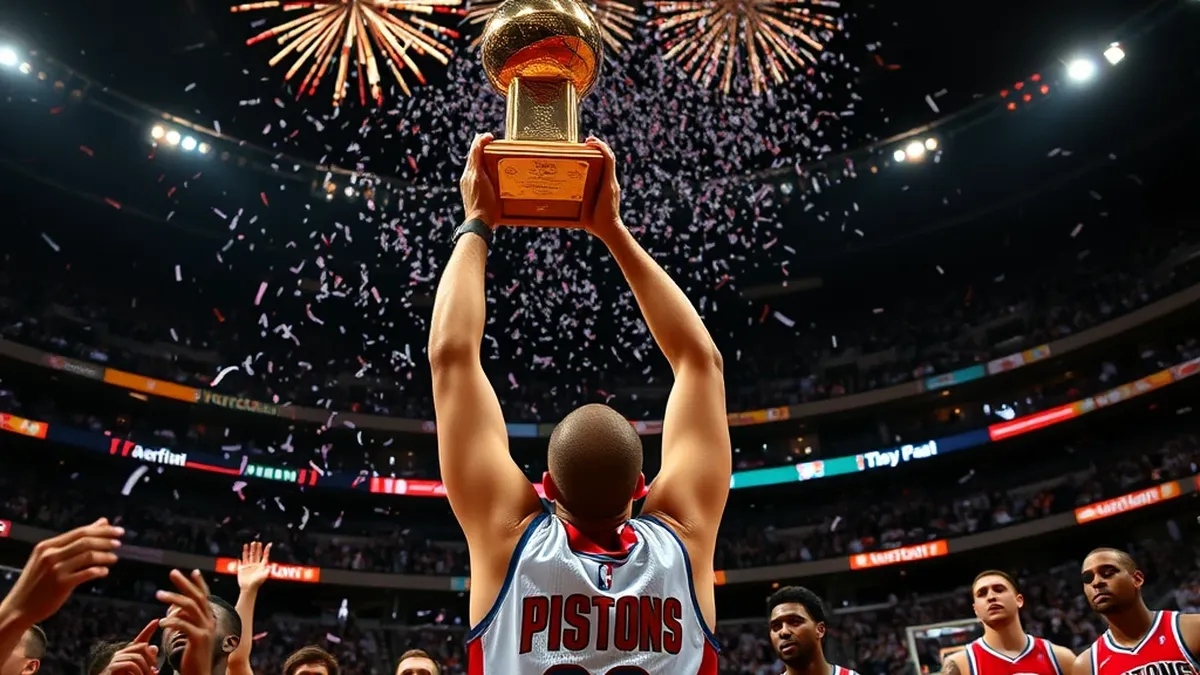
The Detroit Pistons have added former Stanford point guard Ebuka Okorie to their roster, aiming to solidify their playmaking depth for the upcoming season. This strategic draft acquisition comes after the team traded Marcus Sasser to the Dallas Mavericks in the offseason. The Pistons' last official game was a 94-125 loss to the Cleveland Cavaliers on May 18, 2026, capping a recent form of two wins and three losses in their final five outings.
What does Ebuka Okorie bring to the Pistons?
Okorie impressed the Pistons' front office during extensive pre-draft scouting, leading to a trade to secure his rights in the 2026 NBA Draft. His early performance in the NBA Summer League was a positive sign, averaging just under 20 points per game. Pistons Summer League head coach Steve Scalzi praised the rookie's ability to get into the paint at will, noting Okorie quickly understood that paint touches created good offensive outcomes for Detroit.
Although the team finished 1-4 in Las Vegas, the experience allowed Okorie to adjust to professional physicality before his role expands. Offensively, he is a proven scorer who led the ACC in scoring as a freshman, showcasing the self-creation skills that made him a draft standout. You can track his progress and other player developments on the team's official roster page.
How did the Pistons' point guard situation evolve?
The need for back-up point guard help became clear early last season when Marcus Sasser was sidelined with an injury. This forced Cade Cunningham to carry a massive load, and he responded with a career year, posting 23.9 points, 5.5 rebounds, and 9.9 assists per game in the 2025-26 campaign. The injury situation created an opportunity for Daniss Jenkins, who emerged from the G-League's Motor City Cruise.
Jenkins hit several clutch shots and proved to be a reliable understudy, earning a promotion from a two-way contract to a standard NBA deal. In fact, his conversion was the richest in league history. By the time the playoffs arrived, Jenkins had firmly taken the back-up role. Sasser's limited contribution of 4.5 points per game in over 10 minutes per night during the postseason, while shooting 35.7% from three-point range, made him expendable.
What is the current point guard hierarchy?
Entering training camp, Okorie is expected to compete directly with Daniss Jenkins for the primary back-up spot behind Cade Cunningham. Jenkins holds a tangible advantage as the incumbent with experience in head coach J.B. Bickerstaff's system and key minutes during Detroit's previous season. However, Okorie's offensive talent and strong Summer League start make him a serious contender.
The goal for both players is to raise the overall floor of the Pistons' point guard position. Cunningham remains the undisputed starter and offensive engine, but having two capable options behind him is vital for managing his workload over a long season. The trade of Sasser provided some financial flexibility, which the team used in part to finalize negotiations with center Jalen Duren.
What comes next for Detroit?
The focus now shifts to training camp and preseason, where the battle for minutes behind Cunningham will be a key storyline. The team's structure aims to build on last season's foundation while integrating new talent like Okorie. Fans can follow the team's preparation and upcoming matchups by checking the schedule schedule. The Pistons will look to improve on their recent form and build a more consistent performance as they approach the new NBA calendar.